EMEA

In the VIDEO DISTRIBUTION MARKET, HispaSat had significant commercial activity in 2025. Specifically, it signed a long-term renewal of its capacity lease agreement for the distribution of DTT multiplexes in Spain.

It also renewed, for a multi-year period, the capacity lease agreement for the DTH service of one of the main telecommunications operators in Portugal.

HispaSat and NOS sign multi-year agreement for satellite television distribution


HispaSat and NOS, the Portuguese telecommunications company, have renewed their satellite television (DTH) distribution service across the country, including its archipelagos, with a multi-year agreement.

This renewal consolidates a collaboration between the two companies that has lasted for more than 20 years, guaranteeing the continuity and quality of NOS’s satellite content distribution.

HispaSat will provide robust satellite capacity from its 30° West fleet for this key service, which includes more than 100 national and international channels.

This extensive offering guarantees access to a wide variety of entertainment, news, and educational content for Portuguese households across the country.

Despite the extensive deployment of terrestrial audiovisual services, satellite television remains a crucial and necessary solution for ensuring comprehensive television coverage throughout Portugal, especially in rural and hard-to-reach areas.

This service is vital for broadcasting to everyone, a fundamental commitment for NOS, and plays a significant role in bridging the digital divide.

These contracts have contributed positively to the company’s backlog and provide visibility into the medium-term revenue of the video business in the region.

Additionally, virtually all contracts with TV channels that use the company’s satellites to distribute their content to the Americas have been renewed, and revenue from occasional services has been maintained.


In THE RETAIL MARITIME BUSINESS, revenue has increased, thanks in part to the addition of LEO solutions to the Group’s portfolio.

HispaSat and Sat-Elite join forces to enhance multi-orbit service in the maritime sector


HispaSat and Sat-Elite have reached an agreement to boost multi-orbit services in the maritime environment.

The service is based on Sat-Elite’s “EPIC” network management router and HispaSat’s SD-WAN-based network management technology.

This technology, integrated with multi-orbit connectivity that leverages LEO, MEO, and GEO satellites along with 4G and 5G, offers high-performance connectivity.

This partnership underscores both companies’ commitment to providing the most advanced turnkey solutions to the maritime industry and consolidating their position as leaders in multi-orbit connectivity solutions.

Retail maritime business

In THE SECURITY AND EMERGENCY SERVICES MARKET, HispaSat has renewed existing wholesale contracts and is exploring opportunities with various European entities.

In 2025, an agreement was reached with the Belgian TSO for the deployment of a secure satellite communications network, which will increase the resilience of its operations.

This agreement reaffirms the role of satellites in the management of critical infrastructure and the Group’s focus on this segment.

Security and emergency services market
National level

At the NATIONAL LEVEL, the Conéctate 35 project, developed under the UNICO Demanda Rural program promoted by the Spanish Government, has continued to attract retail operators who market satellite broadband service with download speeds of up to 200 Mbps.

Furthermore, in 2025, an agreement was reached with the Government of Senegal to deploy a connectivity network in rural communities.

This contract will be implemented thanks to funds provided by the Spanish State Secretariat for Trade, within the framework of the Africa Forward Alliance agreed upon by the governments of both countries.

AMERICA

In MEXICO, agreements for the provision of satellite backhaul services with the country’s main cellular operators have been maintained and extended.

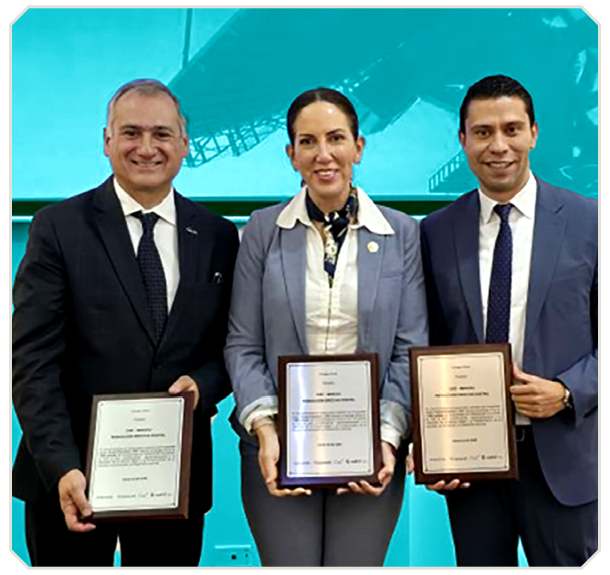
HispaSat and Telcel develop a pilot project in Mexico


HispaSat and Telcel, a Mexican telecommunications company and mobile operator owned by América Móvil, are developing a pilot project to provide connectivity with a OneWeb LEO solution.

The tests focus on supporting their remote stations with satellite backhaul in LEO orbit, whose traffic is delivered to Telcel in Mexico City, as is done in current GEO services.

Telcel

HispaSat is currently validating the different certified antennas for this solution, both flat and dome-type, evaluating the performance of each and determining the best option for the client.

In THE AREA OF CONNECTIVITY FOR BRIDGING THE DIGITAL DIVIDE, HispaSat, in collaboration with Ecuador’s state-owned telecommunications operator, has successfully deployed a project for more than 1,000 schools in the country using the capabilities of its powerful Amazonas Nexus satellite.

HispaSat provides connectivity to rural schools in Ecuador


HispaSat has reached an agreement with the Ministry of Education and CNT Ecuador to connect 1,000 access points in rural educational institutions across the country.

Thanks to the Amazonas Nexus satellite, HispaSat is bringing high-quality internet to schools with one or more teachers in remote and isolated areas, also benefiting nearby communities by facilitating access to digital education.

This project represents a significant step towards a more equitable, inclusive, and connected education.

HispaSat has also participated in the “Internet Boards – Connectivity Communities” project in Colombia, providing connectivity over various satellites in its fleet to the operator commissioned by the Ministry of Information Technologies and Communications (MINTIC) to implement this project.

The area of connectivity for bridging the digital divide

In the VIDEO MARKET, HispaSat has renewed its main contracts with managed DTH satellite TV service clients.

In CHILE, it has consolidated the DTH business previously operated by other incumbent operators in that country.

An agreement has also been signed to host the headend and uplink of one of the main regional DTH operators at HispaSat’s teleport in Lurín, PERU.

This year, HispaSat has secured its first clients for its managed OTT video service in ECUADOR.

Video market

HispaSat will boost connectivity in the Caribbean to explore the possibility of jointly developing a space infrastructure


In February, HispaSat signed a Memorandum of Understanding (MoU) with the Caribbean Telecommunication Union (CARICOM) during the CARICOM Summit in Barbados. The objective is to collaborate on satellite connectivity projects in the Caribbean region.

The signing ceremony was attended by the President of the European Commission, Ursula von der Leyen, the President of Guyana, Irfan Ali, and the Prime Minister of Barbados, Mia Amor Mottley.

With this alliance, HispaSat reaffirms its commitment to reducing the digital divide in isolated or remote areas where other types of infrastructure are not feasible.


Connectivity in the Caribbean

HispaSat signs collaboration agreement with the Dominican Republic and the Ministry of Economy, Trade and Business


HispaSat and the Ministry of Economy, Trade and Business, through the State Secretariat for Trade, signed a Memorandum of Understanding (MOU) with the government of the Dominican Republic to explore the Dominican State’s participation in a shared satellite infrastructure project.

The goal is to provide the Dominican Republic with a sovereign digital infrastructure that will improve connectivity in hard-to-reach regions and allow it to manage its public policies with independence and technical efficiency.

With the signing of this agreement, seven Latin American regions have now joined the preliminary studies to implement this project: Colombia, Brazil, Guatemala, Costa Rica, Paraguay, the Caribbean Community (CARICOM), and now the Dominican Republic.

Collaboration agreement with the Dominican Republic

This project is part of the ‘Digital Alliance’ between the European Union and the countries of Latin America and the Caribbean. The objective is to cooperate in order to strengthen the digital infrastructure of these countries through high-quality, sustainable solutions that will improve connectivity across the Americas and reduce the digital divide. For this reason, it is funded by the European Commission’s Global Gateway program.

EMEA

In the VIDEO DISTRIBUTION MARKET, HispaSat had significant commercial activity in 2025. Specifically, it signed a long-term renewal of its capacity lease agreement for the distribution of DTT multiplexes in Spain.

It also renewed, for a multi-year period, the capacity lease agreement for the DTH service of one of the main telecommunications operators in Portugal.

HispaSat and NOS sign multi-year agreement for satellite television distribution

HispaSat and NOS, the Portuguese telecommunications company, have renewed their satellite television (DTH) distribution service across the country, including its archipelagos, with a multi-year agreement.

This renewal consolidates a collaboration between the two companies that has lasted for more than 20 years, guaranteeing the continuity and quality of NOS’s satellite content distribution.

HispaSat will provide robust satellite capacity from its 30° West fleet for this key service, which includes more than 100 national and international channels.

This extensive offering guarantees access to a wide variety of entertainment, news, and educational content for Portuguese households across the country.

Despite the extensive deployment of terrestrial audiovisual services, satellite television remains a crucial and necessary solution for ensuring comprehensive television coverage throughout Portugal, especially in rural and hard-to-reach areas.

This service is vital for broadcasting to everyone, a fundamental commitment for NOS, and plays a significant role in bridging the digital divide.

These contracts have contributed positively to the company’s backlog and provide visibility into the medium-term revenue of the video business in the region.

Additionally, virtually all contracts with TV channels that use the company’s satellites to distribute their content to the Americas have been renewed, and revenue from occasional services has been maintained.

In THE RETAIL MARITIME BUSINESS, revenue has increased, thanks in part to the addition of LEO solutions to the Group’s portfolio.

HispaSat and Sat-Elite join forces to enhance multi-orbit service in the maritime sector

HispaSat and Sat-Elite have reached an agreement to boost multi-orbit services in the maritime environment.

The service is based on Sat-Elite’s “EPIC” network management router and HispaSat’s SD-WAN-based network management technology.

This technology, integrated with multi-orbit connectivity that leverages LEO, MEO, and GEO satellites along with 4G and 5G, offers high-performance connectivity.

This partnership underscores both companies’ commitment to providing the most advanced turnkey solutions to the maritime industry and consolidating their position as leaders in multi-orbit connectivity solutions across various maritime sectors.

Retail maritime business

In THE SECURITY AND EMERGENCY SERVICES MARKET, HispaSat has renewed existing wholesale contracts and is exploring opportunities with various European entities.

In 2025, an agreement was reached with the Belgian TSO for the deployment of a secure satellite communications network, which will increase the resilience of its operations. This agreement reaffirms the role of satellites in the management of critical infrastructure and the Group’s focus on this segment.

Security and emergency services market

At the NATIONAL LEVEL, the Conéctate 35 project, developed under the UNICO Demanda Rural program promoted by the Spanish Government, has continued to attract retail operators who market satellite broadband service with download speeds of up to 200 Mbps.

National level

Furthermore, in 2025, an agreement was reached with the Government of Senegal to deploy a connectivity network in rural communities.

This contract will be implemented thanks to funds provided by the Spanish State Secretariat for Trade, within the framework of the Africa Forward Alliance agreed upon by the governments of both countries.

AMERICA

In MEXICO, agreements for the provision of satellite backhaul services with the country’s main cellular operators have been maintained and extended.

HispaSat and Telcel develop a pilot project in Mexico

HispaSat and Telcel, a Mexican telecommunications company and mobile operator owned by América Móvil, are developing a pilot project to provide connectivity with a OneWeb LEO solution.

The tests focus on supporting their remote stations with satellite backhaul in LEO orbit, whose traffic is delivered to Telcel in Mexico City, as is done in current GEO services.

HispaSat is currently validating the different certified antennas for this solution, both flat and dome-type, evaluating the performance of each and determining the best option for the client.

Telcel

In THE AREA OF CONNECTIVITY FOR BRIDGING THE DIGITAL DIVIDE, HispaSat, in collaboration with Ecuador’s state-owned telecommunications operator, has successfully deployed a project for more than 1,000 schools in the country using the capabilities of its powerful Amazonas Nexus satellite.

HispaSat provides connectivity to rural schools in Ecuador

HispaSat has reached an agreement with the Ministry of Education and CNT Ecuador to connect 1,000 access points in rural educational institutions across the country.

Thanks to the Amazonas Nexus satellite, HispaSat is bringing high-quality internet to schools with one or more teachers in remote and isolated areas, also benefiting nearby communities by facilitating access to digital education.

This project represents a significant step towards a more equitable, inclusive, and connected education.

HispaSat has also participated in the “Internet Boards – Connectivity Communities” project in Colombia, providing connectivity over various satellites in its fleet to the operator commissioned by the Ministry of Information Technologies and Communications (MINTIC) to implement this project.

Rural schools

In the VIDEO MARKET, HispaSat has renewed its main contracts with managed DTH satellite TV service clients. In CHILE, it has consolidated the DTH business previously operated by other incumbent operators in that country. An agreement has also been signed to host the headend and uplink of one of the main regional DTH operators at HispaSat’s teleport in Lurín, PERU.

This year, HispaSat has secured its first clients for its managed OTT video service in ECUADOR.

Video market

HispaSat will boost connectivity in the Caribbean to explore the possibility of jointly developing a space infrastructure

In February, HispaSat signed a Memorandum of Understanding (MoU) with the Caribbean Telecommunication Union (CARICOM) during the CARICOM Summit in Barbados. The objective is to collaborate on satellite connectivity projects in the Caribbean region.

The signing ceremony was attended by the President of the European Commission, Ursula von der Leyen, the President of Guyana, Irfan Ali, and the Prime Minister of Barbados, Mia Amor Mottley.

With this alliance, HispaSat reaffirms its commitment to reducing the digital divide in isolated or remote areas where other types of infrastructure are not feasible.

Connectivity in the Caribbean

HispaSat signs collaboration agreement with the Dominican Republic and the Ministry of Economy, Trade and Business

HispaSat and the Ministry of Economy, Trade and Business, through the State Secretariat for Trade, signed a Memorandum of Understanding (MOU) with the government of the Dominican Republic to explore the Dominican State’s participation in a shared satellite infrastructure project.

The goal is to provide the Dominican Republic with a sovereign digital infrastructure that will improve connectivity in hard-to-reach regions and allow it to manage its public policies with independence and technical efficiency.

With the signing of this agreement, seven Latin American regions have now joined the preliminary studies to implement this project: Colombia, Brazil, Guatemala, Costa Rica, Paraguay, the Caribbean Community (CARICOM), and now the Dominican Republic.

This project is part of the ‘Digital Alliance’ between the European Union and the countries of Latin America and the Caribbean.

Agreement with the Dominican Republic

Secure communications have become a strategic pillar that Europe is promoting primarily through the federation of existing capabilities via the GOVSATCOM programme and the future multi-orbit constellation IRIS².

Firstly, HispaSat is part of the consortium responsible for implementing GOVSATCOM HUB, which has advanced the programme’s development to enable the provision of initial services in early 2026. This platform connects the communication needs of government users with the satellite resources available in Europe and will include the provision of IRIS² services in the future.

On the other hand, as participants in the 5G-HUB project, progress has been made according to the planned schedule for the year, consolidating the necessary architecture for the proposed use cases. This is a project funded by Horizon Europe and managed by EUSPA for the development of 5G NTN-based use cases for government end users.

Additionally, the European Defence Fund (EDF) is gaining increasing importance in the space sector, and HispaSat is already participating. Specifically, the company, through Indra, is part of the consortium responsible for the second phase of implementation of the European Protected Waveform (EPW).

Finally, HispaSat continues its participation in European security-related forums, such as the EU Space ISAC, and has expanded its presence in new ones, such as NATO’s Wireless Communications Standards Project (NWCSP) to standardize communications in military environments.

Secure communications

The arrival of 5G is revolutionizing the satellite world by integrating satellites as a native part of the mobile ecosystem through NTN (Non-Terrestrial Networks). In this context, HispaSat seeks to position itself as a key player in the NTN ecosystem and a leader in the provision of 5G-based satellite services, reflecting its ambition to be a pioneer in the transition from the traditional DVB model to 5G NTN and, subsequently, to 6G technologies, to enable new services. To this end, the company actively follows the 3GPP standardization group and has joined the Steering Committee of the NTN Forum, sponsored by the ESA.

HispaSat is developing its 5G strategy along three lines of work:

  • Technological enablers, where HispaSat has continued working on Horizon Europe 5G-STARDUST, TRANTOR, and Unity 6G projects and has successfully completed the AROMA 3D Recovery Plan project.

Additionally, the creation of the HispaSat Lab, in collaboration with the CTTC, has been promoted as a space for experimentation and development in 5G NTN.

  • New services, where the company is driving the development of new services based on the advantages offered by the use of 5G NTN.
  • New architectures, with special emphasis on the field of direct services to terminals channelled through the IRIS² low LEO layer.

The exponential increase in launches and objects in orbit, along with the proliferation of manoeuvres and operations in space, has highlighted the urgent need to guarantee the safe, responsible, and sustainable use of space infrastructure. Europe is taking action with the development of legislative initiatives such as the EU Space Act and potential new infrastructure projects, such as those that will demonstrate services in orbit, like the ISOS4I pilot, expected by 2030. This year, HispaSat has actively participated in these initiatives as a space infrastructure operator.

From the perspective of how space-based services can contribute to sustainability in our society, HispaSat has continued its activities in the ESA AI4DIS project, where AI methodologies are applied to Earth observation to simulate scenarios in the calculation of biomass in forests, in line with the Green Engine project.

HispaSat is leading the development and commercialization of the world’s first QKD quantum payload in geostationary orbit, with a launch planned for 2028-2029. QKD technology is the only one to date that has proven secure against the threat of quantum computers, which promise to break current cybersecurity protocols. The quantum payload (QKD-GEO) is manufactured by Thales Alenia Space Spain and is currently in the middle of phase 2 of the project, which involves designing and building the quantum payload up to the engineering models stage.

Furthermore, HispaSat is also leading the Q-DESIGN project, a system of systems for orchestrating multi-orbit satellite QKD networks (LEO and GEO) and terrestrial networks to reach the largest possible number of end users. In this way, work is being done not only with industrial partners but also with operators, end customers, and LEO QKD operators with satellites that are in orbit or about to be launched.

Cybersecurity

Establishing reliable lunar communications systems is a fundamental pillar for the future of exploration and human presence on the Moon. Therefore, HispaSat is strengthening its position for the commercialization of a comprehensive lunar communications solution.

HispaSat is part of the ESA’s Moonlight LCNS project for the development, deployment, and sustainable provision of lunar communications and navigation services. HispaSat’s main activities include mission analysis, end-to-end service validation, external interfaces, and participation in the mission centre. It also leads market analysis, works with potential future users, and promotes the Moonlight system services. The three operators in the consortium, HispaSat, Telespazio, and Viasat, signed a Memorandum of Understanding (MoU) in July 2025 to address the analysis of the business case, co-financing, and the creation of a governance model for system operation and service commercialization.

In parallel, HispaSat is leading the CAJAL project, a Spanish mission to the Moon with the objective of validating the Moonlight System. To this end, it is implementing a communication and navigation payload and a Spanish scientific mission that will also act as a user of the Moonlight System. In this context, HispaSat is participating in the mission definition, system architecture, and definition of validation use cases, as well as the complete project management as the main contractor.

Lunar communications

Secure communications have become a strategic pillar that Europe is promoting primarily through the federation of existing capabilities via the GOVSATCOM program and the future multi-orbit constellation IRIS².

Firstly, HispaSat is part of the consortium responsible for implementing GOVSATCOM HUB, which has advanced the program’s development to enable the provision of initial services in early 2026. This platform connects the communication needs of government users with the satellite resources available in Europe and will include the provision of IRIS² services in the future.

On the other hand, as participants in the 5G-HUB project, progress has been made according to the planned schedule for the year, consolidating the necessary architecture for the proposed use cases. This is a project funded by Horizon Europe and managed by EUSPA for the development of 5G NTN-based use cases for government end users.

Additionally, the European Defence Fund (EDF) is gaining increasing importance in the space sector, and HispaSat is already participating. Specifically, the company, through Indra, is part of the consortium responsible for the second phase of implementation of the European Protected Waveform (EPW).

Finally, HispaSat continues its participation in European security-related forums, such as the EU Space ISAC, and has expanded its presence in new ones, such as NATO’s Wireless Communications Standards Project (NWCSP) to standardize communications in military environments.

Secure communications

The arrival of 5G is revolutionizing the satellite world by integrating satellites as a native part of the mobile ecosystem through NTN (Non-Terrestrial Networks). In this context, HispaSat seeks to position itself as a key player in the NTN ecosystem and a leader in the provision of 5G-based satellite services, reflecting its ambition to be a pioneer in the transition from the traditional DVB model to 5G NTN and, subsequently, to 6G technologies, to enable new services. To this end, the company actively follows the 3GPP standardization group and has joined the Steering Committee of the NTN Forum, sponsored by the ESA.

HispaSat is developing its 5G strategy along three lines of work:

  • Technological enablers, where HispaSat has continued working on Horizon Europe 5G-STARDUST, TRANTOR, and Unity 6G projects and has successfully completed the AROMA 3D Recovery Plan project.

Additionally, the creation of the HispaSat Lab, in collaboration with the CTTC, has been promoted as a space for experimentation and development in 5G NTN.

  • New services, where the company is driving the development of new services based on the advantages offered by the use of 5G NTN.
  • New architectures, with special emphasis on the field of direct services to terminals channelled through the IRIS² low LEO layer.

The exponential increase in launches and objects in orbit, along with the proliferation of maneuvers and operations in space, has highlighted the urgent need to guarantee the safe, responsible, and sustainable use of space infrastructure. Europe is taking action with the development of legislative initiatives such as the EU Space Act and potential new infrastructure projects, such as those that will demonstrate services in orbit, like the ISOS4I pilot, expected by 2030. This year, HispaSat has actively participated in these initiatives as a space infrastructure operator.

From the perspective of how space-based services can contribute to sustainability in our society, HispaSat has continued its activities in the ESA AI4DIS project, where AI methodologies are applied to Earth observation to simulate scenarios in the calculation of biomass in forests, in line with the Green Engine project.

HispaSat is leading the development and commercialization of the world’s first QKD quantum payload in geostationary orbit, with a launch planned for 2028-2029. QKD technology is the only one to date that has proven secure against the threat of quantum computers, which promise to break current cybersecurity protocols. The quantum payload (QKD-GEO) is manufactured by Thales Alenia Space Spain and is currently in the middle of phase 2 of the project, which involves designing and building the quantum payload up to the engineering models stage.

Furthermore, HispaSat is also leading the Q-DESIGN project, a system of systems for orchestrating multi-orbit satellite QKD networks (LEO and GEO) and terrestrial networks to reach the largest possible number of end users. In this way, work is being done not only with industrial partners but also with operators, end customers, and LEO QKD operators with satellites that are in orbit or about to be launched.

Cybersecurity

Establishing reliable lunar communications systems is a fundamental pillar for the future of exploration and human presence on the Moon. Therefore, HispaSat is strengthening its position for the commercialization of a comprehensive lunar communications solution.

HispaSat is part of the ESA’s Moonlight LCNS project for the development, deployment, and sustainable provision of lunar communications and navigation services. HispaSat’s main activities include mission analysis, end-to-end service validation, external interfaces, and participation in the mission center. It also leads market analysis, works with potential future users, and promotes the Moonlight system services. The three operators in the consortium, HispaSat, Telespazio, and Viasat, signed a Memorandum of Understanding (MoU) in July 2025 to address the analysis of the business case, co-financing, and the creation of a governance model for system operation and service commercialization.

In parallel, HispaSat is leading the CAJAL project, a Spanish mission to the Moon with the objective of validating the Moonlight System. To this end, it is implementing a communication and navigation payload and a Spanish scientific mission that will also act as a user of the Moonlight System. In this context, HispaSat is participating in the mission definition, system architecture, and definition of validation use cases, as well as the complete project management as the main contractor.

Lunar communications

The year 2025 marked a turning point in HispaSat’s sustainability journey: the completion of the 2023-2025 Strategic Sustainability Plan with a level of achievement exceeding the target in all areas of operation. The Plan, designed to ensure responsible business management in the environmental, social, and governance spheres, was structured around eleven specific commitments tailored to the company’s business profile and multinational presence in Spain, Latin America, and Europe.

The main achievements of the year are described below, grouped by area of operation.

Environment and waste
management

Towards ISO 14001 Certification in Peru

HispaSat has taken decisive steps during 2025 in implementing an Environmental Management System at its Peruvian subsidiary, following the ISO 14001 standard. After completing the situation analysis and defining the action plan, the work carried out during the year has allowed the deployment of best environmental practices across almost all of the identified requirements, leaving the company, headquartered in Peru, in a position to apply for certification.

Satellite Technology at the Service of Forests

HispaSat has consolidated its commitment to forest monitoring as an environmental conservation tool, deploying Bseed WATCH sensors in more than 13,200 hectares of areas of high ecological value and high vulnerability to forest fires. The monitored areas are distributed across Spain, specifically in the Cáceres districts of Nuñomoral and Caminomorisco and the Asturian municipalities of Allande and Grandas; Portugal in Alpedrinha; and Chile in the Lago Peñuelas Nature Reserve and the Celeo area. This initiative is a concrete example of how space technology can be used to protect the natural environment, integrating satellite connectivity with real-time environmental monitoring.

Responsible Waste Management: Progress in Peru and Colombia

Throughout 2025, HispaSat has implemented more rigorous and traceable waste management at its Latin American facilities. In Peru, the company has strengthened its management model by incorporating a comprehensive inventory of generated waste, a collection system with traceability documentation, and a minimization plan aimed at progressively reducing waste at the source.

To ensure proper recovery, HVAC/SAR Ambiental was brought on board as a specialized waste management company, guaranteeing compliance with local environmental regulations.

Simultaneously, HispaSat conducted an environmental waste assessment in Colombia using the same methodology applied in other Group regions. This work identified and characterized the waste flows generated at the Colombian facilities, distinguishing between hazardous and non-hazardous waste, and evaluated current storage, collection, and management practices.

HispaSat Sustainability

Diversity, work-life balance,
and equality

A year of progress in diversity and inclusion

In 2025, managing diversity and inclusion was one of the most active pillars of HispaSat’s social agenda. Among the year’s most significant milestones are the publication of the new Equality and LGBTQ+ Plans, the launch of Diversity and Inclusion and Gender Equality courses for all staff, the celebration of the Stress Management Prevention Week with participation from all regions, the psychosocial risk assessment, and a roundtable discussion on disability held in October.

The Diversity Committee, responsible for monitoring issues related to harassment and gender-based violence, work-life balance, equality, disability, generational aspects, and interculturality, has operated regularly throughout the year, establishing itself as a forum for analysis and continuous improvement.

Digital divide and
social license

Connectivity where it’s needed most

HispaSat has maintained several active projects in 2025 aimed at reducing the digital divide in rural and vulnerable communities in Spain and Latin America. Ongoing initiatives include internet access in Sigüenza, distance learning services and WiFi connectivity in Ecuador, internet access in the Imaza-Chiriaco District Municipality in Peru, and distance learning projects through the Casa del Saber program of Fe y Alegría in Guatemala, as well as in schools in the municipalities of Riosucio and Puerto Colombia in Colombia.

These initiatives tangibly illustrate how satellite connectivity can transform opportunities for people in areas where other technologies are unavailable.

Cybersecurity

A borderless security model

HispaSat’s company in Peru completed its full integration into the corporate model for comprehensive security management during 2025. This has involved the deployment of the Comprehensive Security Manual and the Business Continuity Manual, integration into the corporate incident reporting system, and the establishment of the Security Operations Group for the Peruvian subsidiary. The subsidiary has also participated in corporate cybersecurity exercises, including phishing simulation tests, reinforcing the security culture throughout the organization.

HispaSat Cybersecurity

Talent and people management

Investing in People

Talent development has been one of HispaSat’s priorities for 2025. During the year, the organization’s segmented talent map was completed, critical positions were identified, and the associated Succession Plan was designed. The Management by Objectives model was implemented for all employees, with differentiation by role and geography, and leadership programs were deployed, including the Leadership in Action program, aimed at middle managers and coordinators.

HispaSat’s own sustainability
initiatives: beyond the Plan

In addition to the commitments of the three-year Plan, HispaSat has launched a series of its own initiatives in 2025 that reflect a growing ambition in sustainability and a proactive response to the demands of the new European regulatory framework for sustainability reporting.

Smart energy management model

HispaSat has implemented an advanced smart energy management model at its highest-consumption facilities, based on four pillars: the installation of smart meters that digitize consumption measurement; the implementation of the Energy Manager program, which centralizes information from all sites in a single system with real-time analysis, automatic alerts, and dashboards; the performance of energy audits to identify savings opportunities and technological improvements; and the optimization of electricity contracts, reinforcing the commitment to supplying energy from renewable sources.

Scope 2 Emissions Offsetting Program

By 2025, HispaSat has designed a centralized process for acquiring Guarantees of Origin through which the company aims to offset all of its Scope 2 emissions — that is, those derived from electricity consumption — across all its geographic locations.

BREEAM pre-assessment at the Arganda del Rey Control Center

HispaSat has submitted its Arganda del Rey Control Center, the company’s strategic facility and largest energy consumer, to a pre-assessment under the BREEAM In Use standard. The analysis placed the Arganda del Rey center at the “Good” level. With this work, HispaSat takes a first formal step toward certifying its most strategic facility under international sustainable building standards.

The year 2025 marked a turning point in HispaSat’s sustainability journey: the completion of the 2023-2025 Strategic Sustainability Plan with a level of achievement exceeding the target in all areas of operation. The Plan, designed to ensure responsible business management in the environmental, social, and governance spheres, was structured around eleven specific commitments tailored to the company’s business profile and multinational presence in Spain, Latin America, and Europe.

The main achievements of the year are described below, grouped by area of operation.

Environment and waste management

Towards ISO 14001 Certification in Peru

HispaSat has taken decisive steps during 2025 in implementing an Environmental Management System at its Peruvian subsidiary, following the ISO 14001 standard. After completing the situation analysis and defining the action plan, the work carried out during the year has allowed the deployment of best environmental practices across almost all of the identified requirements, leaving the company, headquartered in Peru, in a position to apply for certification.

Satellite Technology at the Service of Forests

HispaSat has consolidated its commitment to forest monitoring as an environmental conservation tool, deploying Bseed WATCH sensors in more than 13,200 hectares of areas of high ecological value and high vulnerability to forest fires. The monitored areas are distributed across Spain, specifically in the Cáceres districts of Nuñomoral and Caminomorisco and the Asturian municipalities of Allande and Grandas; Portugal in Alpedrinha; and Chile in the Lago Peñuelas Nature Reserve and the Celeo area. This initiative is a concrete example of how space technology can be used to protect the natural environment, integrating satellite connectivity with real-time environmental monitoring.

Satellite technology at the service of forests

Environment and waste management

Responsible Waste Management: Progress in Peru and Colombia

Throughout 2025, HispaSat has implemented more rigorous and traceable waste management at its Latin American facilities. In Peru, the company has strengthened its management model by incorporating a comprehensive inventory of generated waste, a collection system with traceability documentation, and a minimization plan aimed at progressively reducing waste at the source.

To ensure proper recovery, HVAC/SAR Ambiental was brought on board as a specialized waste management company, guaranteeing compliance with local environmental regulations.

Simultaneously, HispaSat conducted an environmental waste assessment in Colombia using the same methodology applied in other Group regions. This work identified and characterized the waste flows generated at the Colombian facilities, distinguishing between hazardous and non-hazardous waste, and evaluated current storage, collection, and management practices.

Responsible waste management

Diversity, work-life balance, and equality

A year of progress in diversity and inclusion

In 2025, managing diversity and inclusion was one of the most active pillars of HispaSat’s social agenda. Among the year’s most significant milestones are the publication of the new Equality and LGBTQ+ Plans, the launch of Diversity and Inclusion and Gender Equality courses for all staff, the celebration of the Stress Management Prevention Week with participation from all regions, the psychosocial risk assessment, and a roundtable discussion on disability held in October.

The Diversity Committee, responsible for monitoring issues related to harassment and gender-based violence, work-life balance, equality, disability, generational aspects, and interculturality, has operated regularly throughout the year, establishing itself as a forum for analysis and continuous improvement.

Digital divide and social license

Connectivity where it’s needed most

HispaSat has maintained several active projects in 2025 aimed at reducing the digital divide in rural and vulnerable communities in Spain and Latin America. Ongoing initiatives include internet access in Sigüenza, distance learning services and WiFi connectivity in Ecuador, internet access in the Imaza-Chiriaco District Municipality in Peru, and distance learning projects through the Casa del Saber program of Fe y Alegría in Guatemala, as well as in schools in the municipalities of Riosucio and Puerto Colombia in Colombia.

These initiatives tangibly illustrate how satellite connectivity can transform opportunities for people in areas where other technologies are unavailable.

Cybersecurity

A borderless security model

HispaSat’s company in Peru completed its full integration into the corporate model for comprehensive security management during 2025. This has involved the deployment of the Comprehensive Security Manual and the Business Continuity Manual, integration into the corporate incident reporting system, and the establishment of the Security Operations Group for the Peruvian subsidiary. The subsidiary has also participated in corporate cybersecurity exercises, including phishing simulation tests, reinforcing the security culture throughout the organization.

HispaSat Cybersecurity

Talent and people management

Investing in People

Talent development has been one of HispaSat’s priorities for 2025. During the year, the organization’s segmented talent map was completed, critical positions were identified, and the associated Succession Plan was designed. The Management by Objectives model was implemented for all employees, with differentiation by role and geography, and leadership programs were deployed, including the Leadership in Action program, aimed at middle managers and coordinators.

HispaSat’s own sustainability initiatives: beyond the Plan

In addition to the commitments of the three-year Plan, HispaSat has launched a series of its own initiatives in 2025 that reflect a growing ambition in sustainability and a proactive response to the demands of the new European regulatory framework for sustainability reporting.

Smart energy management model

HispaSat has implemented an advanced smart energy management model at its highest-consumption facilities, based on four pillars: the installation of smart meters that digitize consumption measurement; the implementation of the Energy Manager program, which centralizes information from all sites in a single system with real-time analysis, automatic alerts, and dashboards; the performance of energy audits to identify savings opportunities and technological improvements; and the optimization of electricity contracts, reinforcing the commitment to supplying energy from renewable sources.

Scope 2 Emissions Offsetting Program

By 2025, HispaSat has designed a centralized process for acquiring Guarantees of Origin through which the company aims to offset all of its Scope 2 emissions — that is, those derived from electricity consumption — across all its geographic locations.

BREEAM pre-assessment at the Arganda del Rey Control Center

HispaSat has submitted its Arganda del Rey Control Center, the company’s strategic facility and largest energy consumer, to a pre-assessment under the BREEAM In Use standard. The analysis placed the Arganda del Rey center at the “Good” level. With this work, HispaSat takes a first formal step toward certifying its most strategic facility under international sustainable building standards.

State Secretariat for Information Society and Digital Agenda+
HispaSat collaborates both bilaterally and by participating in the preparatory multilateral meetings for the international conferences and forums that affect the company.
Digital Video Broadcasting (DVB)+
The company participates in the promotion of internationally accepted TV standards.
National Telecommunications Agency (ANATEL)+
In Brazil, the company participates in the sessions of the Radiocommunications Rapporteur Group 2 – Satellite Services (GRR2), organized by the Agency, and in work related to the deployment of new mobile services and their impact on satellite services.
Space Data Association+
HispaSat participates in this association, which is responsible for preserving the space environment and the radiofrequency spectrum.
International Telecommunication Union (ITU)+
HispaSat has participated in the ITU Council, the highest body of this organization between conferences, and in working groups organized by the body.
Spanish Association of Defense, Aeronautics and Space Technologies (TEDAE)+
HispaSat is a member of the association and is part of its Space Commission.
Inter-American Telecommunication Commission (CITEL)+
HispaSat participates in the Radiocommunication Committee, including broadcasting, CCP-II.
UHD ALLIANCE+
HispaSat participates in the Association’s activities.
European Conference of Postal and Telecommunications Administrations (CEPT)+
HispaSat participates in the Electronic Communications Committee (ECC), the Conference Preparatory Group (CPG), and its working groups.
Official College of Telecommunications Engineers (COIT)+
HispaSat participated in the awards gala for young engineers organized by the College, which recognizes the best doctoral theses and final degree projects, sponsoring two of the awards.
Inter-American Association of Telecommunications Companies (ASIET)+
As an associate member and member of the Council, HispaSat mainly participates in its General Assembly, Board of Directors, Regulation Commission, and operators’ meetings.
AMETIC+
HispaSat is a member of the Association of Electronics, Information Technology, Telecommunications and Digital Content Companies.
Global Satellite Operators Association (GSOA)+
The company participates in the work of the Council, the Association’s working groups, and meetings with the European Commission.
National Federation of Telecommunications Installations and Integrators (FENITEL)+
HispaSat participated in the Assembly organized annually by the Federation.
Brazilian Union of Satellite Operators (SINDISAT)+
The company actively participates in the working groups that, among other tasks, establish joint comments on ANATEL’s public consultations.
Brazilian Telecommunications Association (TELEBRASIL)+
HispaSat is a member of the association that brings together operators and service providers in the communications and information sector to defend their interests and development.
Brazilian Association of Satellite Operators (ABRASAT)+
HispaSat is part of the Association’s management and participates in its activities.
Spanish Aerospace Technology Platform+
HispaSat participates in the working groups and forums organized by the platform.
Madrid Aerospace Cluster+
HispaSat is a member of this cluster, which brings together more than 50 innovative companies from the sector.
World Teleport Association+
HispaSat is a member of the teleport association.
European Telecommunications Standards Institute (ETSI)+
HispaSat attends the meetings of this institute, which is responsible for developing globally applicable standards relating to information and communication technology.

HispaSat collaborates both bilaterally and by participating in the preparatory multilateral meetings for the international conferences and forums that affect the company.

The company participates in the promotion of internationally accepted TV standards.

In Brazil, the company participates in the sessions of the Radiocommunications Rapporteur Group 2 – Satellite Services (GRR2), organized by the Agency, and in work related to the deployment of new mobile services and their impact on satellite services.

HispaSat participates in this association, which is responsible for preserving the space environment and the radiofrequency spectrum.

HispaSat has participated in the ITU Council, the highest body of this organization between conferences, and in working groups organized by the body.

HispaSat is a member of the association and is part of its Space Commission.

HispaSat participates in the Radiocommunication Committee, including broadcasting, CCP-IIR.

HispaSat participates in the Association’s activities.

HispaSat participates in the Electronic Communications Committee (ECC), the Conference Preparatory Group (CPG), and its working groups.

HispaSat participated in the awards gala for young engineers organized by the College, which recognizes the best doctoral theses and final degree projects, sponsoring two of the awards.

As an associate member and member of the Council, HispaSat mainly participates in its General Assembly, Board of Directors, Regulation Commission, and operators’ meetings.

HispaSat is a member of the Association of Electronics, Information Technology, Telecommunications and Digital Content Companies.

The company participates in the work of the Council, the Association’s working groups, and meetings with the European Commission.

HispaSat participated in the Assembly organized annually by the Federation.

The company actively participates in the working groups that, among other tasks, establish joint comments on ANATEL’s public consultations.

HispaSat is a member of the association that brings together operators and service providers in the communications and information sector to defend their interests and development.

HispaSat is part of the Association’s management and participates in its activities.

HispaSat participates in the working groups and forums organized by the platform.

HispaSat is a member of this cluster, which brings together more than 50 innovative companies from the sector.

HispaSat is a member of the teleport association.

HispaSat attends the meetings of this institute, which is responsible for developing globally applicable standards relating to information and communication technology.